
A drawing class at Betty & Joan's
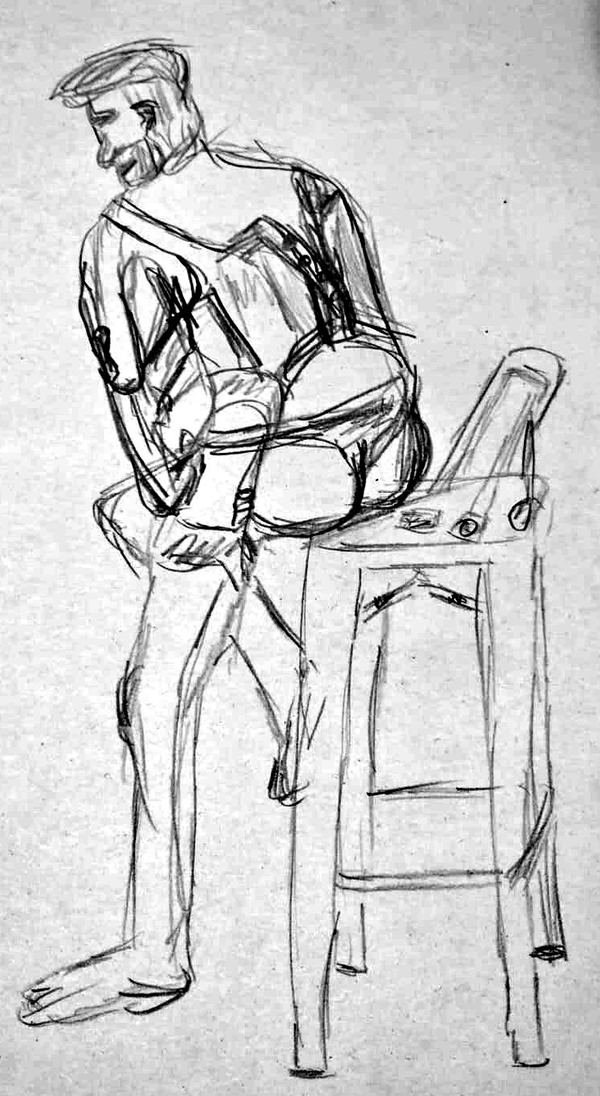
A few weeks ago I spent an evening drawing at Betty & Joan's. Friend of Dorothy had hired the room for a life drawing class, with about 20 of us, a model and an instructor. My drawing turned out better than I expected, so it's below rather than hidden in a drawer. What stayed with me was that the evening happened at all: a group with no room of its own, using a bar that didn't exist two years ago.
Betty & Joan's opened in December 2024 on Elephant Park, sharing its building with The Queer Comedy Club. The same team opened The Nellie around the corner in July, and The Rising has been open a few streets away since April 2024. Across the river, Chroma is being fitted out in the railway arches where the gay club XXL used to be.
After three pieces about what London has lost, that's a welcome list. Piece one ended on the claim that what's broken is the way queer space gets paid for, so this piece asks who's paying for these.
Who's paying for the new ones
Elephant Park is Lendlease's regeneration scheme, and Betty & Joan's moved in as part of it. A developer wants ground floors that draw people in after the office workers go home, and a bar with comedy five nights a week does that. For once, the queer venue and the developer wanted the same thing.
Chroma is a council project, run by The Trampery, a queer-led workspace operator, with £1.5m from Southwark's Community Infrastructure Levy, money developers pay when they build. It has been slow: XXL was evicted in 2019, the space was first promised for 2022, and Chroma now says spring 2027. XXL itself returns next month as a monthly night at Fire in Vauxhall.
The Rising is the oldest route: two people taking on a pub lease. In the other two, somebody else set the terms, and that's the risk in them, because leases end and council priorities change.
There's a fourth route, and it's the one I use most. The Ministry, Ministry of Sound's members' club in Borough, hosts Gayns, Trybz, Friend of Dorothy, Mint's sapphic club nights and GRIPPED's strength sessions for queer women, trans and non-binary people. As I understand it, organisers get the space free in return for keeping places for members, and the club keeps the bar takings. It works, but the groups are guests, on someone else's calendar and terms.
Where the grants went
Grants and donations, the traditional way to pay for community space, are harder to find. LGBT+ Consortium estimates that LGBTQ+ causes receive about 10p in every £100 given to the UK voluntary sector, and in January the Guardian reported that Stonewall's corporate donations had halved. Globally, Outright International found that 203 of the 229 LGBTQ+ organisations it surveyed had lost funding or seen it cut since January 2025.
There is some new money, including a £785,000 LGBT+ London Fund, but grants of up to £20,000 a year won't pay the rent on a building. A grant can fit a room out, as Southwark's will for Chroma, but the operator still has to make the building pay year after year.
Nightlife is adapting
Piece one covered the commercial lease, so briefly: G-A-Y Bar's rent was £410,000 a year on one room that earned mostly from alcohol. London had 127 LGBTQ+ venues in 2006 and has 64 today, and Zodiac Bar in Camden is closing. One product and a narrow window to sell it in leaves nothing to carry a rent review.
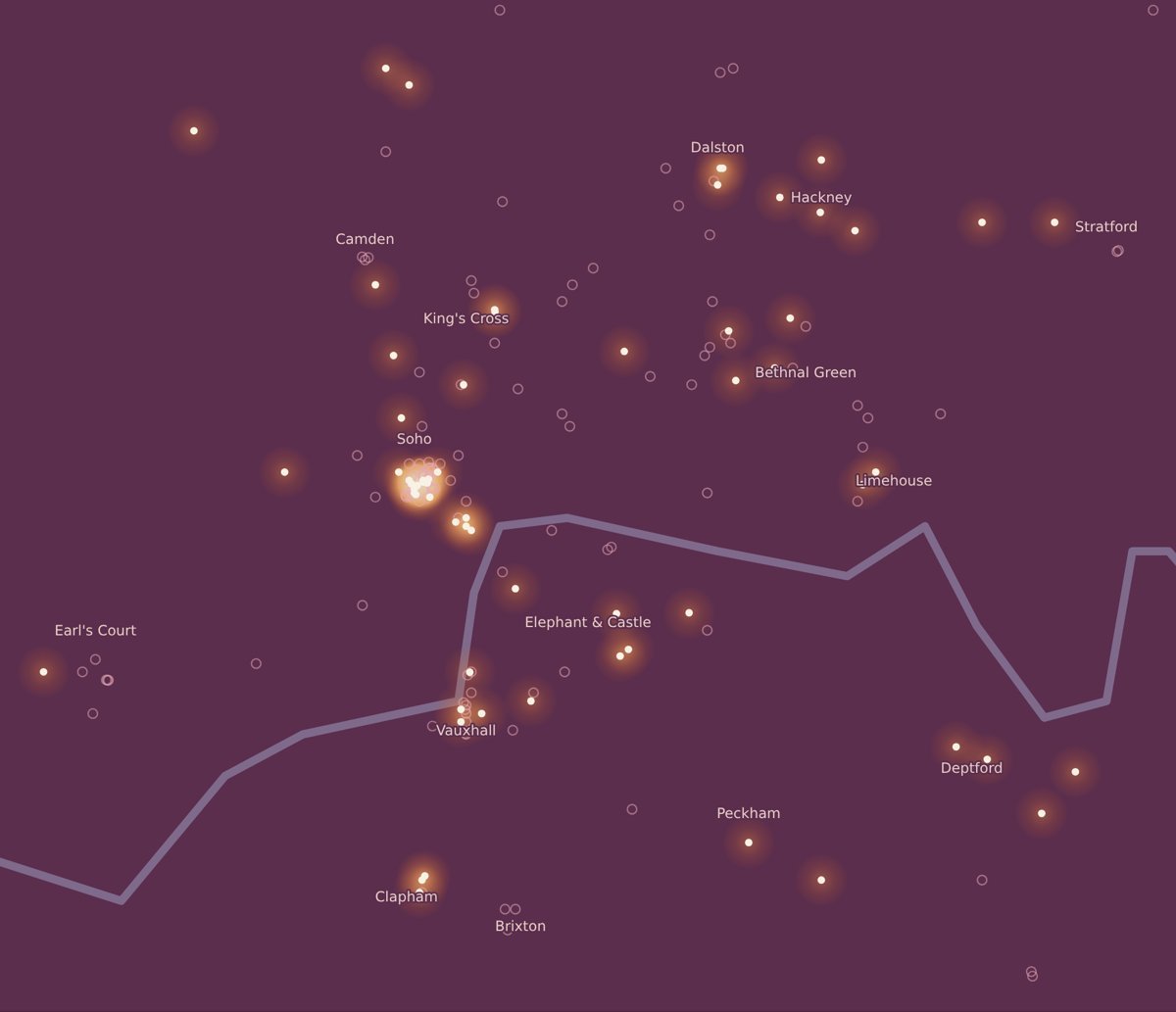
The room G-A-Y left didn't stay empty. In June, Coven: Headquarters opened there, run by Matthew Jacobs Morgan's queer collective from Hackney Wick. Its five floors describe themselves as "part nightclub, part performance space, part community hub", with a café and artists' salon by day. Whether the daytime side can carry its share of a Soho rent is the question every space here faces.
Heaven is coming at it from the other side. Westminster listed it again as an Asset of Community Value in September, protecting it until 2031, and Jeremy Joseph says it's moving towards becoming a charity-run venue with a free LGBTQ+ gym on its stage bar by day. He's still fundraising, and there's no opening date yet.
None of that means people have stopped going out. Electrowerkz by Angel has run as a club since 1987, hosting promoters including the queer nights BASH and ROAST and hiring the building out by day. BASH started last year and says every one of its nights has sold out. When Feel It moved to XOYO in January, its old home at Omeara, now called Rae's, became DILF's weekly Friday night. Venues close, as Zodiac Bar is about to, but the nights keep finding rooms.
What the wellness world has worked out
Mainstream wellness has been learning how to make one building earn all day. Shoreditch &Soul opened in May 2025 in a warehouse off Brick Lane, with a 40-person sauna, an alcohol-free bar, a partner-run café, studios, co-working and event hire, and membership up to £279 a month. MICRO by The Fix is due to open this winter on Sloane Avenue as a single boutique studio combining movement, recovery and nutrition. Neither is a queer space or cheap, but both show that someone will back a building that earns from several things at once.
Smaller studios feel the squeeze differently. In Elephant & Castle this week I got talking to two women out walking their dogs. One runs Barefoot Yoga in the railway arches by Manor Place Depot, and she told me so many yoga studios have opened nearby that staying open means offering something the others don't. Hers is a monthly dog yoga class, families welcome, raising awareness of animal cruelty online.
The honest counter-example is Cardiff's Queer Emporium, home since 2021 to more than 15 LGBTQ+ businesses under one roof. It left its Royal Arcade shop in August, saying, as reported by Nation.Cymru, that costs were rising faster than it could plan for while too few people were coming through the door. It's now looking for a larger site. Sharing a roof spreads the rent, but on its own it doesn't make the sums work.
What we're building
ALP Collective doesn't have a building yet. We're pre-lease, so treat this as a hypothesis.
One difference between businesses matters more than it first appears. A pub or a shop like the Emporium lives on volume: lots of small sales at a few pounds each, every hour it's open. An hour of personal training, an aesthetics appointment, a sports massage or a commissioned portrait earns far more from each customer. For those businesses the harder problem is keeping clients coming back.
That's where we think a shared LGBTQ+ home could make the biggest difference. Someone who comes in for a class is already in the building when they need a massage or a haircut, and each founder's regulars become everyone's potential clients, held together by one membership. It's a boutique idea, much closer to MICRO than to &Soul, so it doesn't need thousands of members, only enough regulars who keep coming back. As far as I can find, nobody has built that yet. That's a reason for caution. I don't think it's a reason not to try.
Chroma will give queer London a theatre and affordable desks, which is a big step. I haven't found anyone building the equivalent for training and wellbeing.
The hypothesis borrows a bit from each route. A property partner holds the lease, as a developer does at Elephant Park. Several independent LGBTQ+-owned businesses pay towards the same square footage, as at &Soul and the Emporium, so a slow month in one of them doesn't take the roof off. And the room doesn't sit empty: a partner-run café that people work from by day becomes the space for a drawing class or a members' social at night, while the gym studio holds strength classes and closed sessions such as one for FLINTA members. None of the 49 LGBTQ+ sports clubs in our directory with a published venue has a clubhouse, and that's the gap we want to fill.
What's running today is small. Monty's strength classes run each week, and our latest one sold out, while a handful of independent founders offer perks to the people who train with us. Whether the rest survives a real rent on a real site is what we don't know yet.
How it's being built
There's one more answer to who pays, closer to home. I'm building ALP as a founder with limited time, without a team or an office, and with a lot of help from AI agents. They search for sources, build and test the financial model, draft pieces like this one and update the website, while I check their work and make the decisions. Two years ago, getting this far would have meant raising money first. Now the early cost is mostly my own time, so the idea can be tested properly before anyone is asked to back a lease.
Back to the drawing class
In the first piece I wrote about a padel court in Torremolinos that cost €10 an hour, because the town treated it as a public amenity. London hasn't got there, and probably won't. For now its new queer spaces are paid for by a developer, a council levy, a members' club's bar, or two people brave enough to sign a pub lease, and each of those works up to a point. The drawing class at Betty & Joan's showed me where that point is.
When the drawing class finished, we all just left. Nobody stayed for a drink, and I've seen groups do the same at The Ministry. Plenty of us drink less than we used to, especially midweek, and people had come for the activity itself. Comedy nights and the monthly members' socials are different: they draw bigger crowds and keep the bar busy, because being together is the whole point of the evening. That matters for every model in this piece. A venue that hosts classes for free and counts on the bar is betting that someone orders. A space that earns from the class, the treatment or the membership is paid whether people stay or not. What it needs is for them to come back next week, and that's what we're trying to build a home around.
Welcome home.
Make room for Joy.
Coming next. When AI does more of the job, where do we go to be together? Follow @alp.collective to hear when it's out.
Previously. The pressure to look the part, Coming out twice, and the clubs that kept me steady and Two Soho venues closed – where does the LGBT community go now?
Sources. No formal interviews were conducted for this piece; the Barefoot Yoga owner's comments are from a conversation with the author in October 2026, used with her agreement. Barefoot Yoga: @barefootyoga_studio; its dog yoga runs with @dogayoga.fit. The Queer Emporium's reasons are from its closing statement as reported by Nation.Cymru; Coven's description is from its own website; The Ministry's hosting arrangement is the author's own understanding as a member, not confirmed by The Ministry. Elephant and Castle venues: Southwark News on Betty & Joan's, The Nellie, The Rising and Elephant Park; Attitude. Chroma: Chroma; QX; Southwark News; Attitude. XXL: Attitude, 2019; XXL London; Fire London announcement, 21 October 2026. Grants: Guardian, January 2026, via Heather Paterson; fundsforNGOs; LGBT+ Consortium; Outright International, Breaking Point, via GCN and The Advocate. G-A-Y rent, venue count and Zodiac Bar: as cited in pieces one and three; ALP.ha AFTER DARK. Coven: Attitude, Time Out, Broadsheet. Heaven: Time Out, September 2026; Jeremy Joseph via AOL; G-A-Y & Heaven. Electrowerkz, BASH and ROAST: Wikipedia; QX on BASH's first birthday, BASH sell-outs and ROAST. Feel It and DILF: The Gay Passport; DILF London. &Soul: CLAD; City AM. MICRO: MICRO by The Fix. Queer Emporium: Nation.Cymru; The Cardiffian. The Ministry groups: QX; GRIPPED; Mint. Clubhouses: ALP Collective review of the 49 ALP.ha PASS clubs with a published venue, October 2026.